

How IATA Created a Shared Product Language to Power Its Next Era of Innovation
Want a PDF version of this case study? Download Here Company Snapshot The International
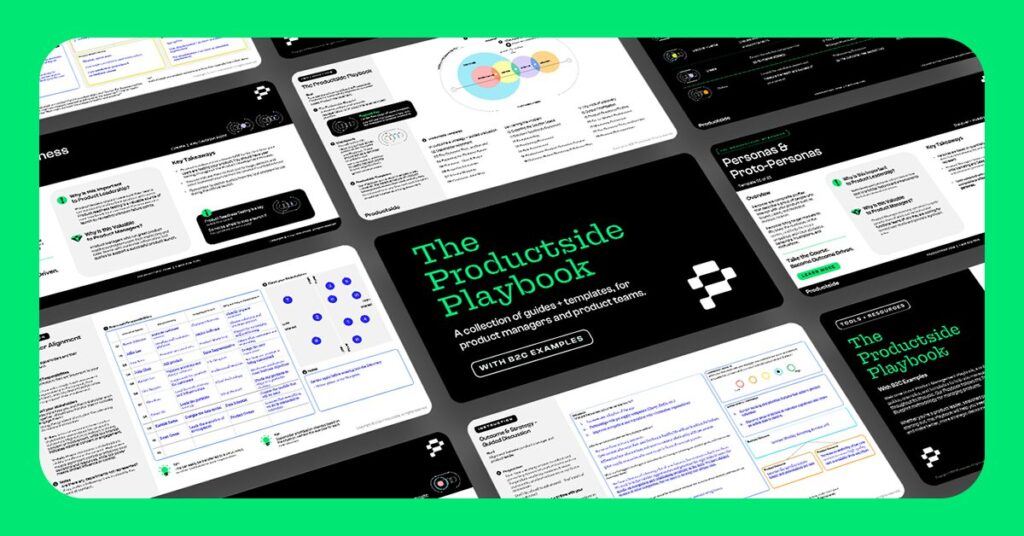
Today, we’re excited to announce the Productside Blueprint, a new and improved visual representation of the ideal, outcome driven product management process.
The world’s tallest and most impressive structures all started with a blueprint: a shared vision that set sights on the sky while laying out a plan on how to get there. Product management is no different.
In order for Product Managers to deliver results they need a blueprint to help them know what they’re building towards and how to get there.
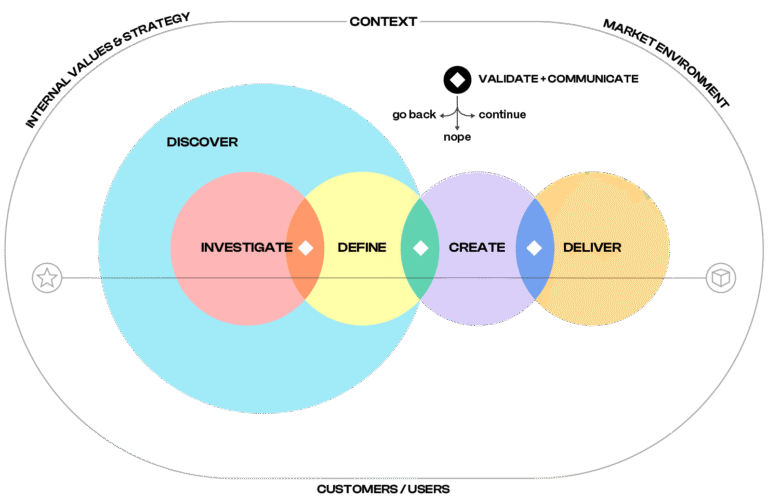
Only the right blueprint will deliver the desired results, that’s why our team of product experts took the time to carefully craft the Productside Blueprint: a step-by-step, new and improved visual representation of the ideal outcome driven product management process.
For years, we taught the “optimal product process”, (much of which is included in the new Productside Blueprint), but over time our team of product experts has found ways to improve on the optimal product process while making the process more focused on outcomes. The new Blueprint is broken into 5 sections:
The outermost ring is the “context” ring in which any product professional, (new or experienced), can start by understanding their role and how they are operate within an organization.
Knowing their role, a product manager can move into the the Discovery phase, where it’s important for to investigate by gathering insights and potential opportunities based on customer/user pain-points and desires.
This is an important time to stay focused on the problem space.
Discovery extends beyond the problem space and now moves into the solution space, as product managers begin to explore potential solutions with the help of a solidified problem statement. This is also a key time to determine product-market fit.
Moving out of the discovery phase, product managers can shift into product creation, focusing on go-to-market, testing, troubleshooting, and more.
Your solution is delivered to customers/users, but as a product manager, that doesn’t mean you’re done. How do you measure success? Are you on the road to your outcomes? What comes next?
Throughout the Blueprint you may have noticed the checkpoints, (marked with a small diamond shape), which are points in the process strategically placed as reminders to validate and communicate. These checkpoints are key times you can utilize in your organization’s governance process, and make decisions with all stakeholders.
The Productside Blueprint, while being a step-by-step process, is designed in a way that is meant to reflect on the circular nature of product management. In other words, the Blueprint is meant to reflect how product management isn’t always a clean and sequential process. So often the process requires going back to something previous or sometimes being involved in two parts of the process at the same time. This is also why we have designed the blueprint with overlapping circles, to reflect the transitions and/or shifts between the phases.
While the Blueprint is a great plan, it takes tools and skills to build skyscrapers. That’s why we developed the Productside Playbook alongside the Blueprint. The Playbook has 20+ “Plays” (or guides), with each including examples and templates designed to empower you with the tools you’ll need to reach your desired outcomes.
Below is a list of the 23 Plays (and their respective templates), found in the Productside Playbook.
The Plays included above that make up the Playbook have been designed to take a product manager, or product management team, through the entire Productside Blueprint, providing them with the tools they will need to be successful. It starts out by setting sights on the outcomes and then provides the tools to get there.
As mentioned previously, for years we taught the “Optimal Product Process,” much of which can still be found in the new, transformative materials we are releasing today. Over those years we have continuously updated the Optimal Product Process to include the best practices and developments in product management methodologies. As we’re sure product professionals can appreciate, it became clear that these new changes we’ve been working on were more than “version 2.0”, and that we needed an entirely new and improved solution.
These new tools have been heavily developed and invested in by our own team of product experts. Bringing together a team as experienced and knowledgeable as ours inspires a healthy amount of debate as to what the ideal product management process and best practices looks like. Further to that point, our team not only has decades of experience of their own in product management, but also years of experience in teaching and consulting in product management. They have seen it all.
This accumulation of experience has resulted in the new Productside Blueprint & Playbook. It is backed not only by experience, but by real-world application across a myriad of industries. It has been thoroughly developed, with great attention to detail to ensure it delivers what matters most to the students and organizations we work with: outcomes.
Perhaps the best news of all is that you don’t have to just take our word for how awesome these new materials are. You can, for free, gain access to 3 Plays, (with templates), right away when you download our Product Starter Pack, which includes:
And don’t worry, it’s called the “Product Starter Pack” for a reason. There will be more to come, but for now, give it a test drive, and see how you can elevate your product management work by becoming more outcome driven.

Want a PDF version of this case study? Download Here Company Snapshot The International

Most product teams don’t fail because they can’t ship. They fail because product discovery didn’t do its job. As product managers and product leaders, we’ve all lived this
Product management feels harder than it should It’s not because teams are lazy. Not because PMs
